The aerobic engine is extraordinary — the gap is anaerobic.
Full lab and track physiological assessment. Aerobic and anaerobic profiling. Where the 4-minute barrier lives for the athlete closest to breaking it.
Osborne & Jones — University of Exeter | Kirby — Nike Sport Research Lab
With the models built, the team brought the world's most prolific middle distance runner in history into the Nike Sport Research Lab for a full physiological assessment. Here's what they found.
Every system measured. Aerobic and anaerobic. The full physiological fingerprint of the athlete closest to breaking the barrier.
Running economy among the best ever measured. Lactate turnpoints well above average. Her Critical Speed — the aerobic ceiling — is already within range of the 4-minute target. The aerobic side is built.
D′ (anaerobic reserve), V̇Lamax, and peak lactate values all sit below what the model requires for a 4-minute mile. The anaerobic system doesn't yet match the aerobic engine. This is where the gap lives.
There is headroom to increase maximal oxygen uptake with targeted interval sessions at 3000m pace — not more mileage.
Compared to male sub-4 minute milers. Green zone = 4-minute target range.
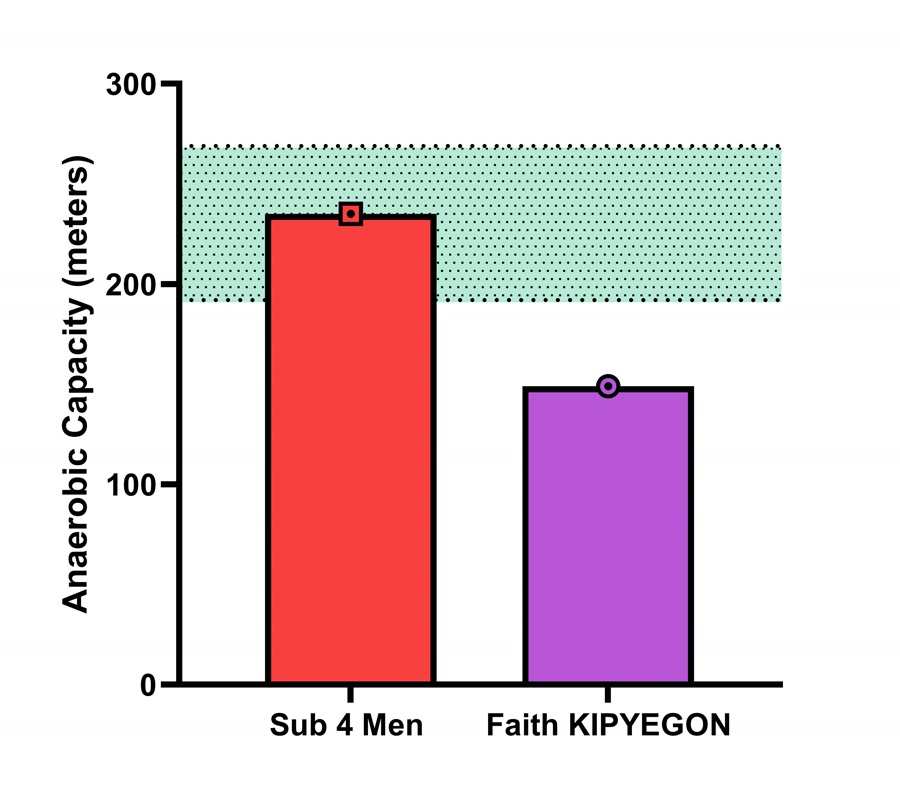
Anaerobic Capacity (D′) — Kipyegon falls short of the target zone
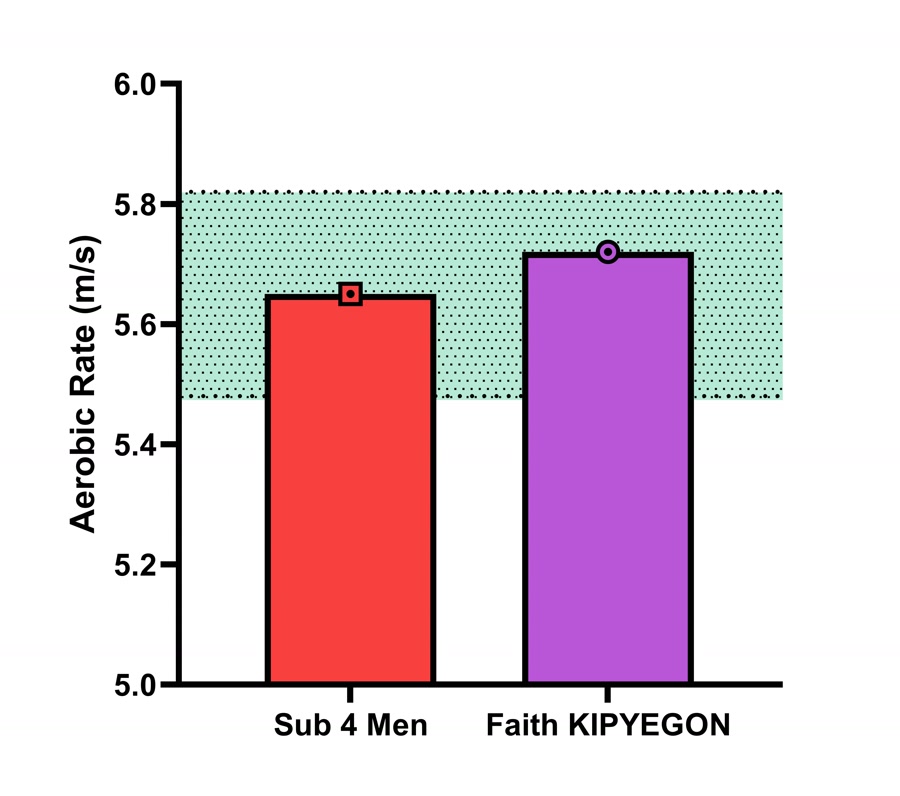
Aerobic Rate (Critical Speed) — both in the target zone
Modeled values for elite female middle-distance runners. Green zone = 4-minute target range.
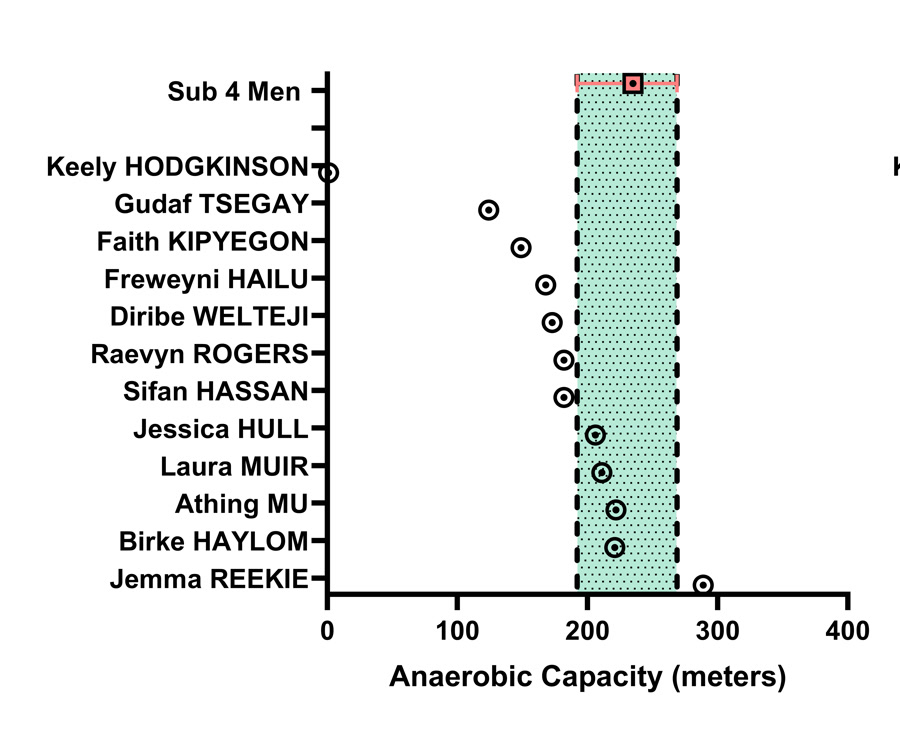
Anaerobic Capacity — most athletes fall below the target zone
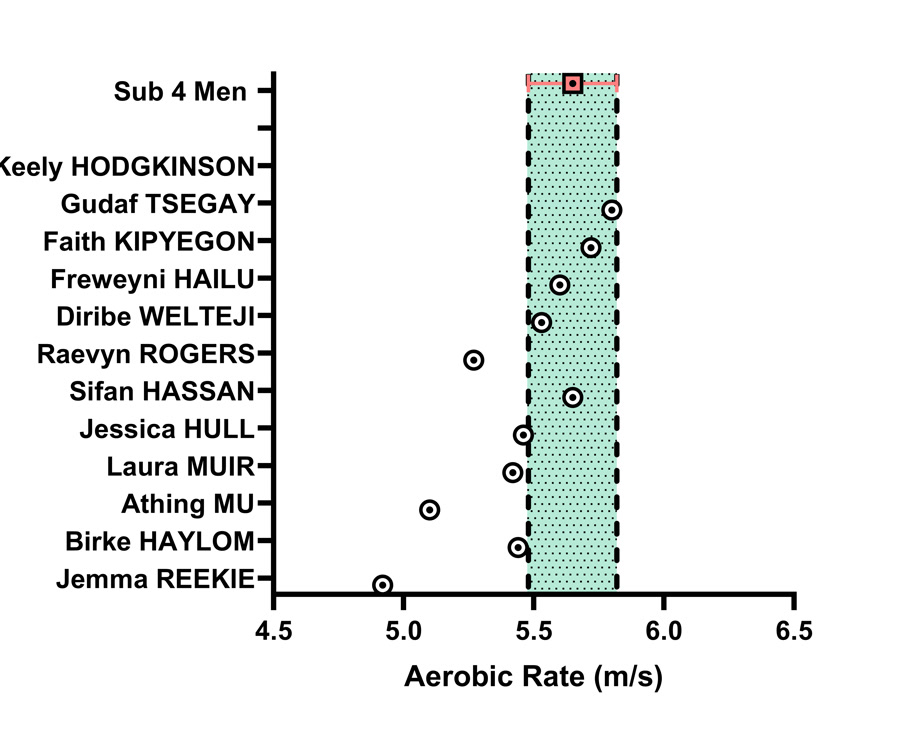
Aerobic Rate — several athletes in or near the target zone
The Exeter analysis concludes: her profile resembles an elite distance runner, not a middle-distance specialist. The 4-minute mile demands a shift — less endurance bias, more anaerobic power — without losing what makes her extraordinary.
Push maximal oxygen uptake higher with targeted interval sessions at 3000m pace — not more mileage.
Build anaerobic capacity through speed endurance work at 400–800m race pace with full recovery.
Increase the rate of anaerobic energy production. Recruit more fast-twitch fibers. Improve the ability to generate — and tolerate — lactate.
The key insight: less volume, higher intensity, longer recovery. The training shift isn't about running more — it's about running differently.
The aerobic engine is built. The barrier is anaerobic.
When Exeter tested the world record holder against their model, the data was unambiguous: extraordinary aerobic efficiency, but an anaerobic system that doesn't yet match. The formula for sub-4 isn't about getting fitter — it's about getting faster.
This study is one chapter in a multi-institution scientific expedition exploring the limits of the women's 4-minute mile.
See the full series →